



· Tourinza Team
Golden Triangle Tour Itinerary: The Complete Delhi–Agra–Jaipur Guide
Everything you need to plan a Golden Triangle trip: the route, how many days you need, what to see in each city, and how to choose between a 3, 4 or 6-day itinerary.
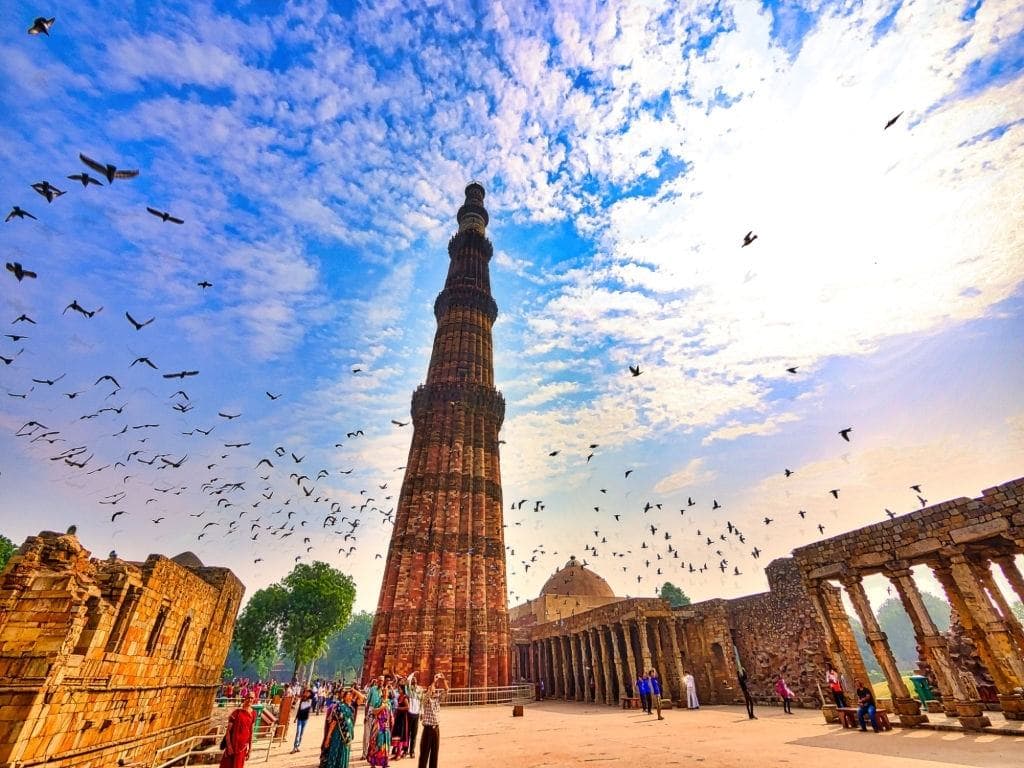
The Golden Triangle is India's most-travelled tourist circuit for a reason: in a single loop of roughly 720 km, it connects the capital's Mughal and colonial history (Delhi), the world's most famous monument to love (Agra's Taj Mahal), and the pink sandstone forts and palaces of Rajasthan (Jaipur). This guide covers the route, how long you actually need, and what to prioritise in each city.
What is the Golden Triangle route?
The triangle is Delhi → Agra → Jaipur → Delhi (or the reverse), named for the roughly triangular shape it traces on a map. The legs are:
- Delhi to Agra: about 230 km, 3–3.5 hours by car via the Yamuna Expressway, or 100 minutes on the Gatimaan Express train.
- Agra to Jaipur: about 240 km, roughly 5 hours by road, usually broken up with a stop at the abandoned Mughal city of Fatehpur Sikri.
- Jaipur back to Delhi: about 280 km, 5–6 hours by road via NH48.
How many days do you need?
Three days is the practical minimum — one city per day, with the Taj Mahal visited at sunrise on day two so you still have the afternoon for Agra Fort and the drive onward. Four to six days lets you slow the pace down, add a second night in Jaipur to shop the bazaars properly, or extend into Rajasthan (Pushkar, Jodhpur, Udaipur) or add a wildlife stop at Ranthambore National Park.
- 3 days: the classic express version — see our 3 Day Golden Triangle Tour.
- 4 days: the same three cities at a noticeably more relaxed pace — see our 4 Days Golden Triangle Tour.
- 6 days: room to add Fatehpur Sikri properly, a second Jaipur day, and buffer time — see our 6 Day Golden Triangle Tour.
Weighing up whether three days is actually enough for your trip? We wrote a full breakdown — Golden Triangle in 3 Days: Is It Enough? — covering what you see, what you miss, and when we'd tell you to take five days instead.
What to see in each city
Delhi
Split between Old Delhi (Jama Masjid, a cycle-rickshaw ride through Chandni Chowk, the spice market at Khari Baoli) and New Delhi (Humayun's Tomb, India Gate, Qutub Minar).
Agra
The Taj Mahal at sunrise, when the marble is at its most photogenic and the crowds are thinnest, followed by Agra Fort in the same morning. Most itineraries also stop at Fatehpur Sikri, Emperor Akbar's short-lived capital, en route to Jaipur.
Jaipur
Amber Fort (best visited in the morning), the City Palace, Jantar Mantar observatory, and a photo stop at Hawa Mahal, the honeycomb-fronted Palace of Winds.
Best time of year to go
October to March is the comfortable window — daytime temperatures stay pleasant and mornings are cool enough for early starts. April to June gets very hot (well above 40°C in Agra and Jaipur some afternoons), and the July–September monsoon brings humidity and occasional heavy rain, though the crowds are thinner if you don't mind either.
Frequently asked questions
How many days do you need for the Golden Triangle?
Three days is the practical minimum, covering Delhi, Agra and Jaipur at one city per day. Four to six days lets you add Fatehpur Sikri properly, a second night in Jaipur, or extensions into Rajasthan.
What is the best time of year for the Golden Triangle tour?
October to March, when daytime temperatures are comfortable. Avoid April to June if possible, when Agra and Jaipur regularly exceed 40°C in the afternoon.
Can you do the Golden Triangle without a guide?
Yes, but a licensed local guide is worth it at the Taj Mahal and Agra Fort specifically — both have a lot of history that isn't explained on-site, and a guide can navigate the security queues faster.
Is Jaipur or Agra better to visit first?
Agra first is standard, since it lets you catch the Taj Mahal at sunrise on day one or two before continuing to Jaipur — Fatehpur Sikri sits conveniently between the two.