



· Tourinza Team
Is India Safe for Tourists? An Honest 2026 Answer
A straight answer about safety in India — what actually goes wrong on trips, what is overstated, and what the official advisories really say.
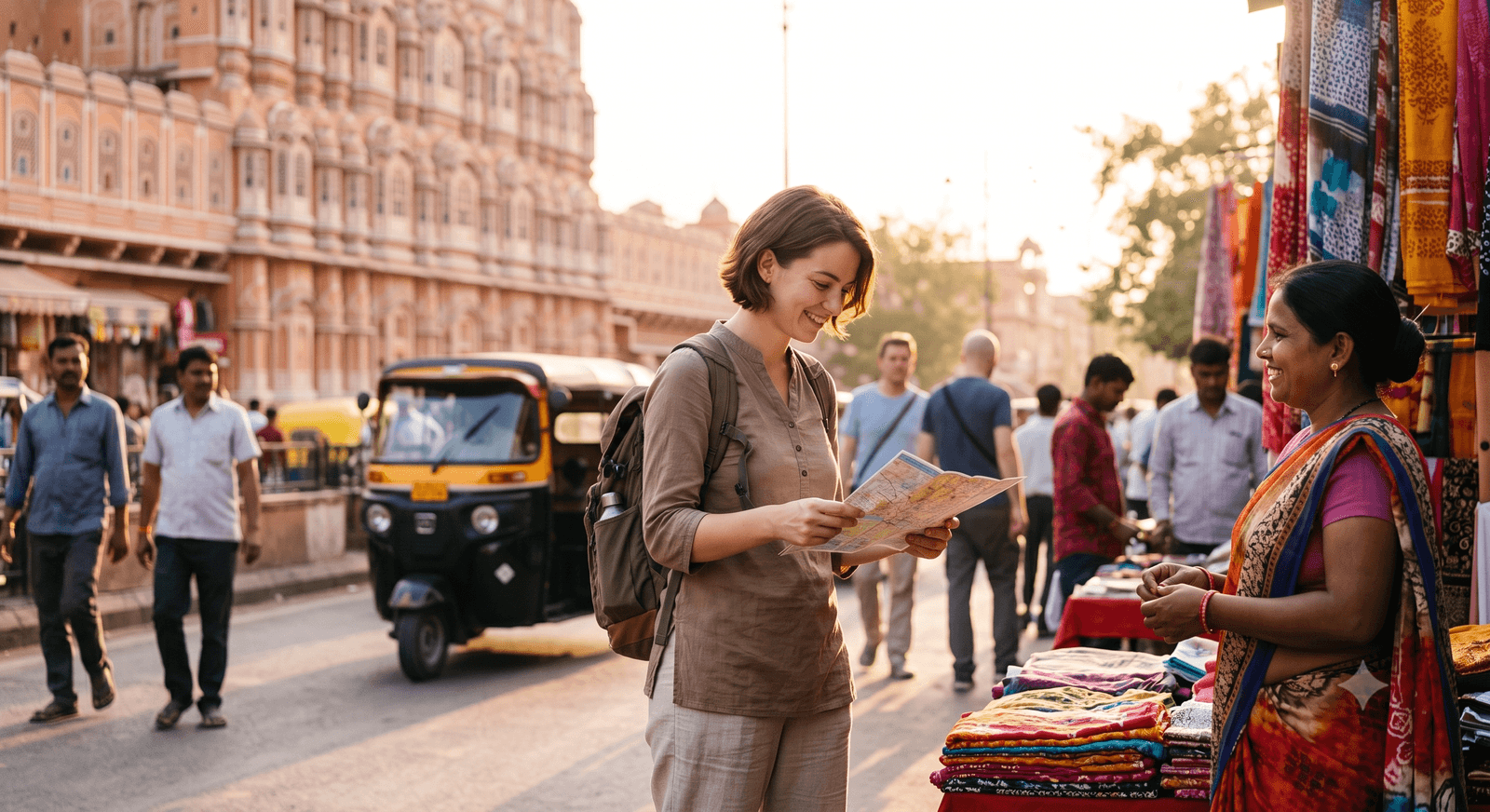
This is the question we are asked more than any other, and it usually arrives with an apology attached. It does not need one. It is a reasonable thing to ask about a country you have mostly encountered through news coverage, and it deserves a straight answer rather than either a brochure or a horror story.
The short answer
For the kind of trip most visitors take — the Golden Triangle, Rajasthan, Kerala, Goa — India is broadly safe, and the things that actually go wrong are overwhelmingly inconvenience rather than danger. Stomach upsets, overcharging and pushy selling are common. Violence against tourists is rare.
A useful anchor: at the time of writing the US State Department places India at Level 2, “exercise increased caution” — the same level it assigns France and Italy. That is not a claim that India is identical to those countries to travel in; it plainly is not. But it does put the official assessment somewhere very different from where most first-time visitors assume it sits. Advisory levels are revised periodically, so check the current one before you book.
What the advisories actually say
Both the US and UK governments single out specific regions rather than the country as a whole. The areas carrying the most serious warnings are:
- Jammu and Kashmir, other than eastern Ladakh and Leh.
- Within roughly 10 km of the India–Pakistan border.
- Manipur and parts of the north-east.
- Areas of central and eastern India affected by Naxalite activity.
It is worth being precise about what that means for a normal itinerary: Delhi, Agra, Jaipur and the rest of Rajasthan are not in any of those categories. Neither is Varanasi, Kerala or Goa. The regions carrying the strongest warnings are hundreds of kilometres from the standard tourist routes, and none of them appear on a typical first visit. Check the current wording on your own government's advisory before you travel — these get updated, and they are the authoritative source rather than any tour operator, us included.
What actually goes wrong
In order of how often it happens:
1. Stomach upsets
By far the most common problem, and the one most likely to cost you a day. It is rarely serious and almost always preventable — see the food and water section below.
2. Being overcharged
Auto-rickshaw fares quoted at four times the going rate, “the meter is broken”, shops with a special price for visitors. Annoying, occasionally expensive, not dangerous.
3. Commission scams
The structural one worth understanding. A great deal of Indian tourism runs on commission: a driver who takes you to a particular emporium, a “guide” who steers you to a specific shop, a helpful stranger who tells you your hotel has closed down and knows a better one. Almost none of this is threatening. It is a persistent, low-grade pressure to spend money somewhere the person talking to you gets a cut.
4. Traffic
The genuinely underrated risk, and the one visitors worry about least. Indian road traffic is dense, fast and follows conventions that are not written down. Crossing a busy road in Delhi on foot is the most objectively hazardous thing most tourists do on the entire trip.
What rarely goes wrong, despite the headlines
Violent crime against foreign tourists is uncommon, and the incidents that reach international news reach it precisely because they are exceptional. The everyday texture of travelling in India is not menace: it is noise, crowds, heat and a great deal of unsolicited attention, which is tiring and can feel confronting, but is a different thing from being unsafe.
Being stared at is normal, particularly outside the big cities, and particularly if you are visibly foreign. It is curiosity rather than hostility. So are requests for selfies, which you are entitled to decline.
Solo female travellers
This deserves a direct answer rather than a hedge. Many women travel India solo and have an excellent time. It is also true that women report harassment — staring, comments, unwanted contact in crowds — at rates higher than in most of Europe or North America, and that dismissing this is not doing anyone a favour.
What experienced solo travellers consistently recommend: arrive in a new city in daylight, book the first night's accommodation in advance, use app-based cabs rather than hailing on the street at night, choose the women's carriage on the Delhi Metro at busy times, and dress on the covered side of local norms — shoulders and knees — which reduces attention noticeably. None of that is a guarantee; it is friction reduction, and most women who travel here regularly do all of it automatically.
Food and water, specifically
This is where a little discipline prevents most of the problems people actually have.
- Do not drink tap water, and that includes ice in drinks from unfamiliar places and water used to rinse a glass. Sealed bottled water is universally available; a filter bottle works and produces less plastic.
- Hot and fresh beats cold and sitting. Street food cooked in front of you at a busy stall is generally lower risk than a buffet dish that has been out for an hour, which is the opposite of most people's instinct.
- Busy stalls are safer than empty ones — high turnover means nothing has been standing around.
- Be careful with raw salad and cut fruit from stalls, since both were washed in something and you do not know what.
- Ease into the spice. A lot of what gets blamed on hygiene is simply a digestive system meeting far more chilli and oil than it is used to.
Money and the scams worth knowing
- The gemstone scam. Jaipur's speciality: you are persuaded to buy stones to resell at a profit at home. There is no profit and no buyer. Buy jewellery because you like it, never as an investment.
- “Your hotel has closed.” Said by a driver or a stranger near a station, followed by an offer to take you somewhere better. Phone the hotel.
- Fake ticket counters near major stations, positioned to look official. Buy at the actual counter or online.
- Temple “donations”. A blessing you did not ask for, followed by pressure for a large fixed sum. Establish whether there is a cost first.
- Meter and fare games. Agree the fare before getting into an auto-rickshaw, or use an app where the price is set in advance.
Delhi, Agra and Jaipur compared
Delhi is the most demanding of the three, simply because it is the biggest and busiest, and where the most practised touts operate — the areas around New Delhi railway station and Paharganj in particular. It is also entirely manageable.
Agra concentrates its pressure tightly around the Taj Mahal: persistent souvenir selling and unofficial “guides” at the gates. Away from the monuments it is quieter than visitors expect.
Jaipur is generally the easiest of the three to walk around, with the gemstone scam as its notable local speciality.
What travelling with a driver or guide changes
We should be upfront that we sell guided tours, so treat this section accordingly. The honest version is that a guide does not make India safer in the sense of protecting you from crime — that is not the risk. What it removes is friction: the fare negotiation at every journey, the commission pressure, the uncertainty about which queue is the real one, and the fatigue of making a hundred small decisions in an unfamiliar system while hot and jet-lagged.
Plenty of people travel India independently and do it well. If you are an experienced traveller, you will be fine. If this is your first trip outside Europe or North America, or you are short on time and want the days to work, having someone handle the logistics is worth what it costs. Our team is based in Agra, and you can read what previous guests have said on our reviews page.
Practical habits that prevent most problems
- Keep a photo of your passport and visa on your phone, and the originals separate.
- Carry small notes — nobody ever has change, and it is a standard lever for overcharging.
- Get a local SIM or eSIM at the airport. Working data makes app-based cabs and maps possible, which removes a whole category of problem.
- Note your country's embassy number before you travel.
- Take travel insurance that covers medical treatment. Private hospitals in the major cities are good; they expect payment.
- Be decisive with touts. A clear “no” and continuing to walk works. Apologetic hesitation reads as an opening.
So, is it safe?
Yes, with the qualification that “safe” and “easy” are different things. India is not a difficult country to stay safe in. It is a demanding country to travel in — loud, crowded, hot, and relentless in a way that photographs never convey. Most people who have a bad time in India were not endangered; they were overwhelmed.
Go with the practicalities handled, a realistic idea of the first two days, and enough slack in the schedule to lose an afternoon without it mattering. See our Golden Triangle tours and Taj Mahal tours for how we structure a first trip.
Frequently asked questions
Is India safe for tourists in 2026?
For the standard tourist routes — the Golden Triangle, Rajasthan, Kerala, Goa — yes. At the time of writing the US State Department places India at Level 2, exercise increased caution — the same level as France and Italy. The most serious warnings apply to specific regions such as Jammu and Kashmir, the Pakistan border area and parts of the north-east, none of which fall on a typical itinerary. Advisory levels change, so check the current one before booking.
Is India safe for solo female travellers?
Many women travel India solo without incident, and it is also true that harassment such as staring and unwanted comments is reported more often than in Europe or North America. The habits that help most: arrive in new cities in daylight, book the first night ahead, use app-based cabs rather than hailing at night, and dress on the covered side of local norms.
What is the most common problem tourists have in India?
Stomach upsets, followed by being overcharged. Both are usually preventable — drink only sealed or filtered water, favour freshly cooked food from busy stalls over anything that has been standing, and agree fares before getting into a rickshaw.
Can you drink the tap water in India?
No. Use sealed bottled water or a filter bottle, and be aware that ice and rinsed glasses in unfamiliar places carry the same risk.
What are the most common scams in India?
Fare and meter games in auto-rickshaws, commission-driven detours to shops, being told your hotel has closed so you can be taken elsewhere, unofficial ticket counters near stations, pressure for large temple donations, and in Jaipur specifically the gemstone resale scam. Almost all are financial rather than threatening.
Is it safe to eat street food in India?
Often safer than a hotel buffet, if you choose well. Busy stalls cooking fresh in front of you have high turnover and nothing standing around; the risk is in food that has been sitting, and in raw items such as salad and pre-cut fruit.