



· Tourinza Team
Ranthambore Tiger Safari: Best Time to Visit, Zones and What to Expect
A practical guide to Ranthambore National Park's tiger safaris — when the park is open, how zones and safari vehicles work, and realistic expectations on seeing a tiger.
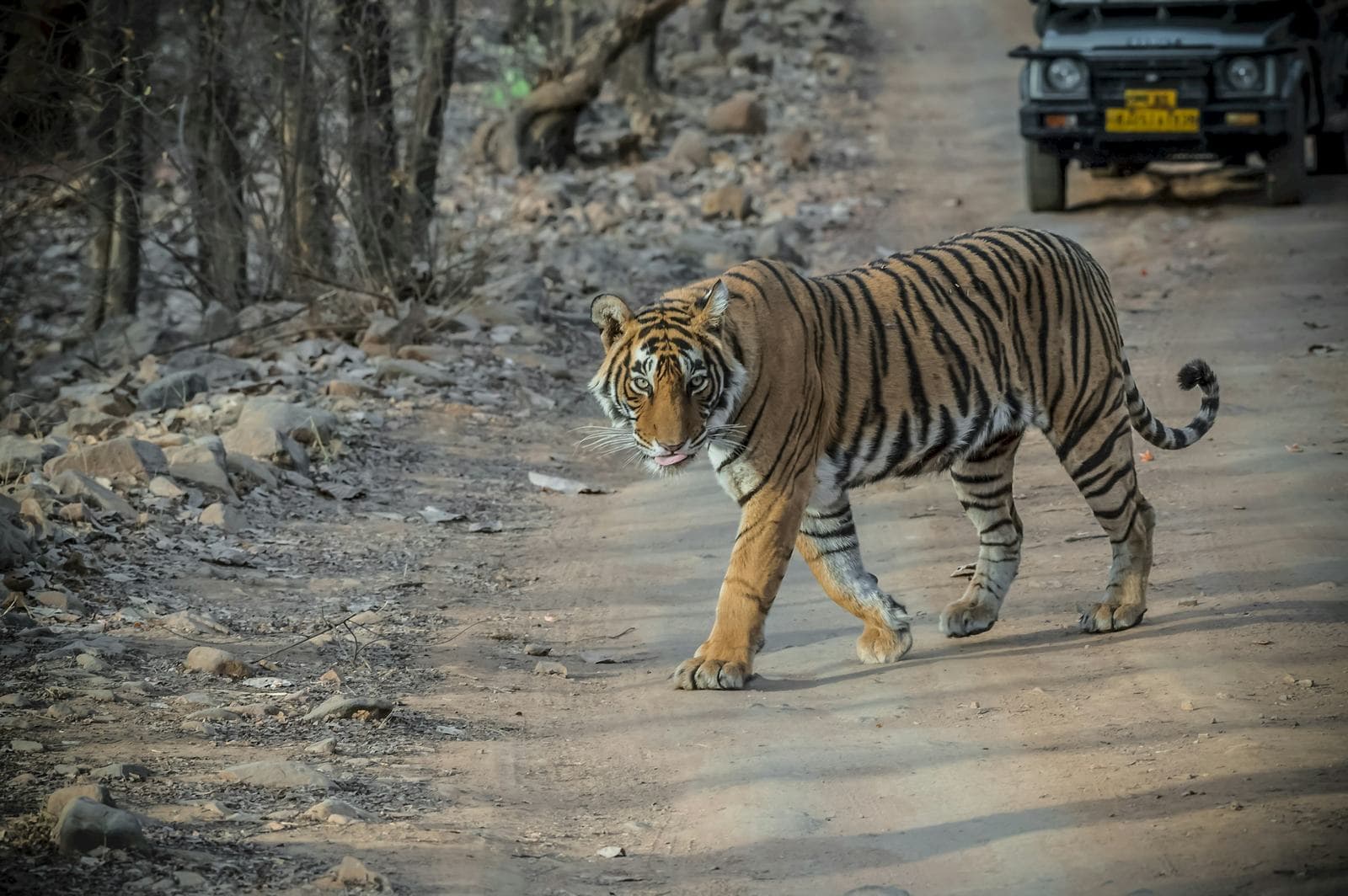
Ranthambore National Park in eastern Rajasthan is one of India's most reliable places to see a wild Bengal tiger, thanks to a relatively high tiger density and a landscape — dry deciduous forest broken up by lakes and rocky outcrops — that makes sightings easier than in denser jungle parks.
When is Ranthambore open?
The park is open from 1 October to 30 June and closed for the monsoon from July through September, when the forest floor becomes too wet and overgrown for safaris. Within that window, October to March offers cooler, more comfortable game drives, while April to June — despite the heat — often produces the best sightings, since tigers spend more time near the park's water holes as the surrounding forest dries out.
How the zones work
Ranthambore is divided into ten numbered safari zones. Zones 1 through 5 sit closest to the historic Ranthambore Fort and are generally considered the most reliable for sightings, since several resident tigresses have territories there; zones 6 through 10 are larger and less predictable, though still capable of excellent sightings. Zone allocation for each safari is done by permit and isn't something you can fully choose on the day, which is part of why sightings can never be guaranteed on any single safari.
Canter or gypsy?
Two vehicle types run safaris: the open 20-seater canter (shared with other travellers, more affordable) and the six-seater open-top gypsy (smaller group, more manoeuvrable, generally preferred for photography). Both run two fixed slots a day, roughly dawn and mid-afternoon.
What are your actual odds of seeing a tiger?
Sightings can never be guaranteed — this is wild India, not a zoo — but with two safaris booked across a visit, especially in peak season (October to April), most guests do see at least one tiger. Even without a tiger sighting, the drives themselves are worthwhile: sambar deer, langurs, marsh crocodiles, and well over 300 recorded bird species share the park.
Combining it with the Golden Triangle
Ranthambore sits conveniently between Agra and Jaipur, which is why it's commonly added onto a Golden Triangle itinerary rather than visited as a separate trip. Our Golden Triangle Tour with Ranthambore Tiger Safari adds two safari drives to the classic Delhi–Agra–Jaipur circuit.
Frequently asked questions
When is Ranthambore National Park open?
From 1 October to 30 June each year. It's closed for the monsoon season from July through September.
What is the best time to see a tiger in Ranthambore?
April to June often produces the strongest sightings, since dry conditions push tigers toward the park's remaining water holes — though October to March offers a more comfortable climate for the safari itself.
Are tiger sightings guaranteed at Ranthambore?
No safari anywhere can guarantee a wild tiger sighting. With two safaris booked in peak season, most visitors do see at least one, but it's never certain.
Should I book a canter or a gypsy for a Ranthambore safari?
A gypsy (6-seater) offers a smaller group and more flexibility for photography; a canter (20-seater, shared) is a more affordable option with the same safari zones and timing.