
· Abdul Amir — Licensed Agra guide, 11 years
First Time in India: What to Know Before You Go
Tipping, what to wear, money, safety, visa basics and etiquette — the practical answers first-time visitors to India actually need, from an Agra operator.
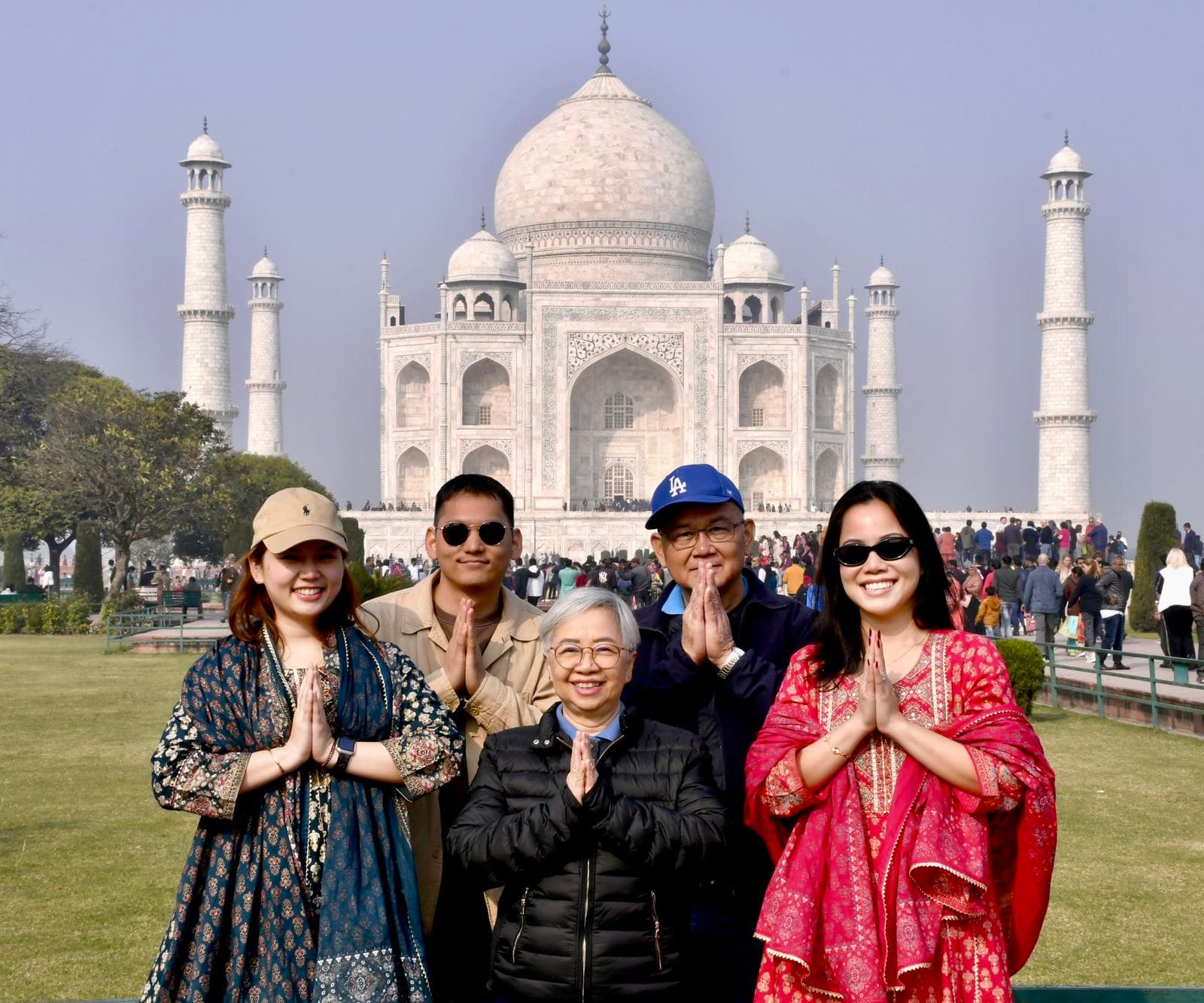
We get the same nine questions from almost every first-time guest, usually in the weeks before they fly. Not “is India safe” — that one has its own answer. These are the smaller, practical ones that never quite make it into a guidebook: how much to tip, what to wear, whether your card will work, what shots you need. Here they are, answered straight, from ten years of running private tours out of Agra and watching what actually trips people up.
Do I need a visa?
Yes — almost every nationality needs a visa to enter India, and for tourism the easiest route is the e-Tourist Visa, applied for online before you travel rather than at an embassy.
For US citizens, the e-Tourist Visa comes in three lengths: a 30-day visa ($25, or $10 from April to June), a 1-year visa ($40), and a 5-year visa ($160) — each with a 3% bank processing charge on top. The 1-year and 5-year visas allow multiple entries but cap your total stay at 180 days in any calendar year; the 30-day visa also allows multiple entries within its 30-day window, not a single one. Apply directly at indianvisaonline.gov.in — not a third-party site — between 4 and 120 days before you fly. You'll need a scanned passport photo page, a passport-style photograph, and your travel dates. Approval typically comes back within a few working days, sometimes faster. There's nothing to obtain from an embassy beforehand — the ETA itself is your authorisation, and immigration stamps it into your passport when you land, so just print it and bring it with your passport.
Fees and rules change periodically, so confirm the current figures on the official portal before you pay — don't rely on a blog (including this one) for the exact number on the day you apply.
Is tipping expected?
Yes, and the amounts are smaller than most first-time visitors assume. Tipping isn't automatically included in most bills, and it's genuinely appreciated rather than obligatory — but for the people who make a private tour work, it's the norm, not an extra.
As a rough guide:
- Private tour guide (full day) — 10% of the tour cost, or roughly ₹300–500/day
- Driver (full day) — ₹200–400/day
- Hotel porter — ₹50–100 per bag
- Housekeeping — ₹50–100 per stay, left in the room
- Restaurant (no service charge) — 10% of the bill
- Taxi (longer journeys) — round up, or ~10%
Tip in cash, in rupees, directly to the person — not added to a card payment where it may not reach them. On a multi-day private tour, it's common to tip the guide and driver separately at the end, not per day.
What should I wear?
Loose, breathable, and modest is the short version. Temperatures swing more than most people plan for — cool mornings even in a hot season, genuinely cold nights in December and January in Delhi, Agra and Jaipur — so layers do more work than any single outfit choice.
For temples, mosques and some historic sites, shoulders and knees covered is the baseline, and you'll sometimes be asked to remove shoes before entering. Lightweight cotton or linen handles heat far better than synthetic fabrics. A scarf or shawl is worth packing regardless of gender — useful for covering shoulders at a shrine, blocking sun, or adding warmth on an early sunrise start. Comfortable closed shoes matter more than anything else on the list; you'll be on uneven stone at most monuments, including the Taj Mahal's marble plinth, for longer than you expect.
Is India safe?
Short answer: yes, for the overwhelming majority of visitors, with the same ordinary caution you'd use in any unfamiliar country — and the real risks are rarely the ones the headlines focus on. We've written the honest, detailed version of this separately, including what actually goes wrong on trips and what doesn't: Is India Safe for Tourists? An Honest Answer.
How much cash do I need, and are cards accepted?
Both — plan to carry some cash and one internationally enabled card, not just one or the other.
Visa and Mastercard are widely accepted at hotels, quality restaurants, and established tour operators; American Express less consistently outside premium venues. Smaller shops, local markets, and street food stalls are cash-only, or take UPI (India's QR-code payment system), which foreign cards generally can't access directly. Foreign-issued debit cards work at most ATMs, but check with your bank before you travel about international withdrawal fees — these add up faster through many small withdrawals than a few larger ones. If an ATM or card machine asks whether to charge you in your home currency or in rupees (“Dynamic Currency Conversion”), choose rupees; it's consistently the better exchange rate. Keep a mix of ₹50–₹500 notes; very large notes can be hard for small vendors to break.
Do I need any vaccines or health prep?
Make sure routine vaccines are current — MMR, Tdap, flu, COVID-19 — and talk to a travel clinic or your doctor 4–6 weeks before you fly about the India-specific ones: Hepatitis A and typhoid are commonly recommended for most visitors, and Hepatitis B, Japanese encephalitis, and rabies may be recommended depending on your itinerary and how long you're travelling. Malaria prevention is generally advised for most of the country (high-altitude areas are lower risk). None of this is a substitute for your own doctor's advice, which should account for your health history and exact route.
The everyday precaution that matters more day to day: stick to bottled or sealed water, eat well-cooked food from places with good turnover, and be cautious with raw salads and street food in your first days while your system adjusts. This prevents far more discomfort on a trip than any vaccine does.
What's the best time of year to visit?
October through March, with November through February as the most comfortable window and October and March as good shoulder months with fewer crowds. Expect mild days and genuinely cold nights in December and January in Delhi, Agra and Jaipur — pack for both. April through June turns hot and dry, regularly above 40°C (104°F) by midday, which makes long days of sightseeing uncomfortable rather than impossible. July through September is monsoon season — heavier humidity and unpredictable rain that can disrupt a day's plan, though it's also when you'll see the country at its greenest and find lower prices.
Do I need a guide, or can I go independently?
You can do either — it depends on how much you want explained versus how much you want to navigate yourself. Independent travel in the Golden Triangle is entirely possible: transport, tickets and hotels can all be booked directly. A private guide adds three things independent travel doesn't: context (a monument is a very different experience once you know what you're looking at), logistics handled for you in three unfamiliar cities in a short window, and someone who can adjust the day in real time — starting earlier for a sunrise, skipping a site that's not worth the queue that day, rerouting around a closure. For a first trip on a tight timeline, most of our guests find a guide pays for itself in time saved alone. For more information on how we run these, see our Golden Triangle tours or read what past guests say in reviews.
What's one thing that surprises first-time visitors?
How much the country changes across a few hundred kilometres. Delhi, Agra and Jaipur are three days apart by road and feel like three different countries — different food, different pace, different architecture. Visitors who arrive expecting “India” as one experience are usually the most surprised, in a good way, by how distinct each stop is. It's also why three cities in one trip works better than it sounds on paper: each one resets the experience rather than repeating it.
Frequently asked questions
Do US citizens need a visa for India?
Yes. The e-Tourist Visa, applied for online at indianvisaonline.gov.in before travel, is the standard route for tourism.
How much should I tip a private tour guide in India?
Roughly 10% of the tour cost, or about ₹300–500 per day, tipped in cash directly to the guide.
Is it safe to drink tap water in India?
No — stick to bottled or sealed water throughout your trip, including for brushing teeth.
What's the coldest month to visit Delhi, Agra or Jaipur?
January, with cold nights and mild days. It's still a good time to visit — pack layers.
Can I use my US debit card in India?
Yes, at most ATMs, though international withdrawal fees vary by bank — check before you travel and choose to be charged in rupees, not your home currency, when given the option.
Do I need a visa on arrival, or should I apply before I fly?
Apply online before you fly. The e-Tourist Visa must be approved in advance; it is not issued on arrival for most nationalities.